
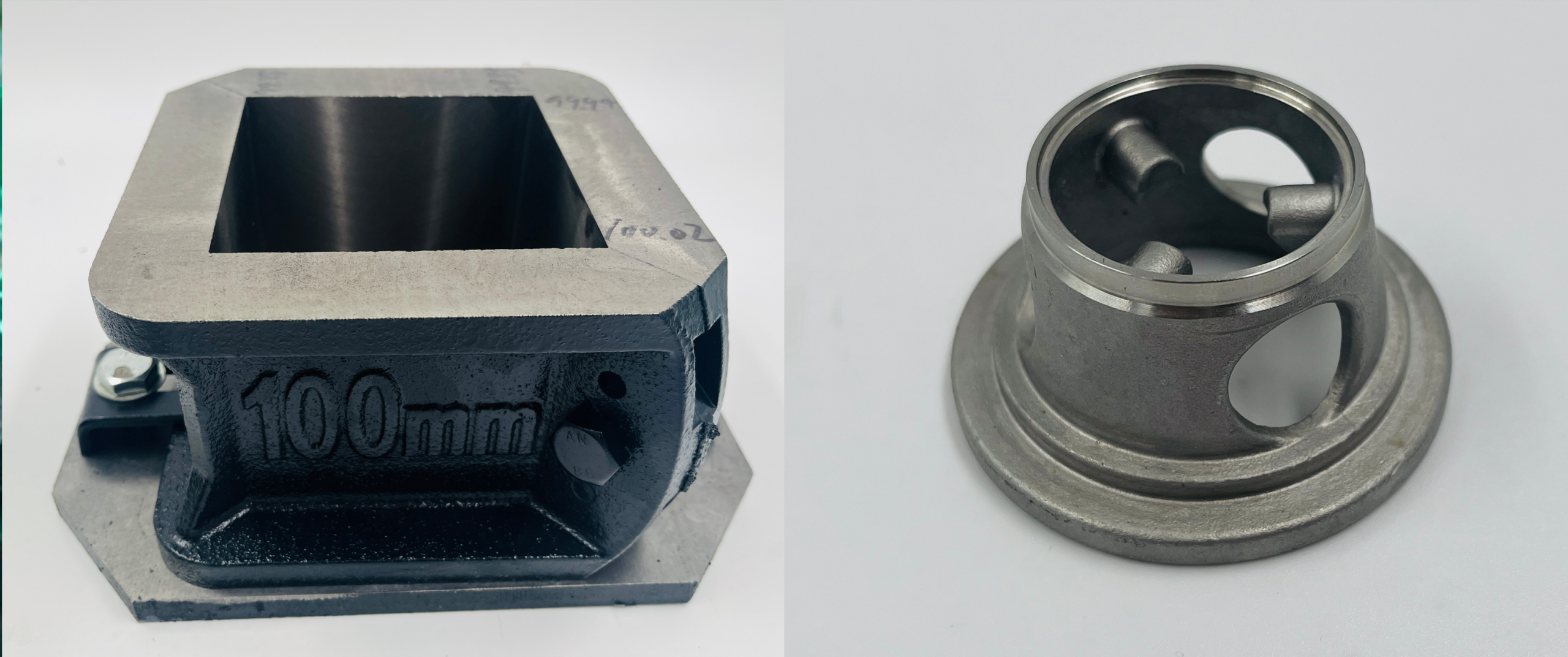
Die casting is one of the most efficient processes for producing complex, dimensionally accurate metal parts at high volumes. We coordinate die casting services through a curated network of specialized foundries, offering solutions from prototype tooling to full-scale production.
Process Overview
Die casting forces molten metal into precision steel molds (dies) under high pressure, creating parts with excellent surface finish and tight dimensional accuracy—often requiring little or no post-machining. The dies can be reused for tens of thousands of cycles, making this process highly cost-effective for large production runs.
Materials We Cast
- Aluminum alloys (A380, ADC12, A356, etc.) – lightweight, good corrosion resistance, widely used in automotive and electronics
- Zinc alloys (ZA8, Zamak 3, etc.) – excellent strength, ductility, and surface finish for complex, thin-walled parts
- Magnesium alloys (AZ91D, etc.) – ultra-lightweight, ideal for portable electronics and automotive weight reduction
- Copper alloys – for specialized thermal and electrical conductivity applications
Process Capabilities
- Hot-chamber die casting – suitable for zinc and magnesium, with faster cycle times
- Cold-chamber die casting – suitable for aluminum and copper alloys, handling higher melting temperatures
- Multi-slide die casting – for complex, miniature components
- Vacuum die casting – reduces porosity for enhanced mechanical properties
Typical Components
- Automotive parts: engine blocks, transmission housings, structural brackets
- Electronics: heat sinks, LED housings, shielding covers
- Industrial: pump housings, compressor parts, gearbox covers
- Consumer products: power tool housings, cookware handles, furniture fittings
Post-Casting Operations
We offer a full range of secondary operations to bring your castings to finished condition:
- CNC machining for critical mating surfaces and threaded holes
- Deburring, shot blasting, and tumbling
- Surface finishing: powder coating, anodizing, plating, painting
- Heat treatment for improved mechanical properties
- Assembly and leak testing where required
Lead Time
Typical lead time for prototype tooling: 4–6 weeks
Hardened production tooling: 6–10 weeks
Volume production: 2–4 weeks, depending on complexity and quantity